“Librika coffee beans” search results (81400)
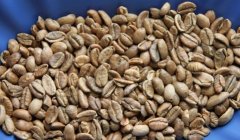
China Hainan Coffee Beans Librika Coffee Beans
Coffee beans: large shrubs or small trees, 6-15 m tall; bark dark brown; branches spreading, hard and straight. Leaves opposite, leathery, elliptic or obovate-elliptic, 15-30 cm long, apex mucronate, base broadly cuneate, margin entire, rarely wavy, often with pits in lower vein axils; petiole 8-20 mm long; stipules broadly triangular, 3-4 mm long, apex obtuse, rarely convex
2014-11-11 Coffee knowledge China Hainan coffee beans Liberica coffee beans
Introduction to Librika Coffee beans
Liberica coffee beans: large shrubs or small trees, 6-15 m tall; dark brown bark; branches spreading, hard and straight. Leaves opposite, leathery, elliptic or Obovate-elliptic, 15-30 cm long, tip mucronate, base broadly cuneate, margin entire, rarely microwave, often with small pores in lower vein axils; petiole 8-20 mm long; stipules broadly triangular, 3-4 mm long, tip obtuse, rarely convex
2015-04-16 Libby Rika coffee beans boutique introduction shrubs Joe
What are Columbia coffee beans? what are the characteristics of Colombian coffee beans?
Coffee beans such as Brazil and Colombia are named after their origin. Not a breed! The varieties of coffee are divided into: 1. Arabica 2. Robbins 3. Librika 4. Exelsa. Among them, about 60% of Arabica species account for the world. Robbins 35%. Liberica and Exelsa (rarely) Mocha has more meaning: the word Mocha is transliterated from a loanword and is used in coffee industry terminology.
2016-05-22 Boutique coffee what Colombia coffee beans characteristics Brazil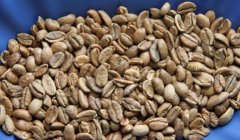
Chinese coffee Hainan Liberica coffee beans
Liberica coffee beans: large shrubs or small trees, 6-15 m tall; dark brown bark; branches spreading, hard and straight. Leaves opposite, leathery, elliptic or Obovate-elliptic, 15-30 cm long, tip mucronate, base broadly cuneate, margin entire, rarely microwave, often with small pores in lower vein axils; petiole 8-20 mm long; stipules broadly triangular, 3-4 mm long, tip obtuse, rarely convex
2014-11-20 Coffee knowledge Chinese coffee Hainan coffee Librika coffee beans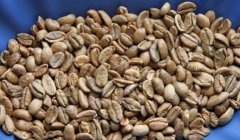
Liberica coffee beans produced in Hainan
Liberica coffee beans: large shrubs or small trees, 6-15 m tall; dark brown bark; branches spreading, hard and straight. Leaves opposite, leathery, elliptic or Obovate-elliptic, 15-30 cm long, tip mucronate, base broadly cuneate, margin entire, rarely microwave, often with small pores in lower vein axils; petiole 8-20 mm long; stipules broadly triangular, 3-4 mm long, tip obtuse, rarely convex
2014-09-25 Hainan Librika coffee beans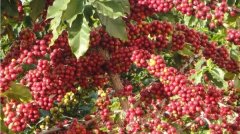
Harvesting and processing of coffee
Coffee is the fruit of a Rubiaceae plant growing about 6000 feet above sea level, distributed on the world's narrow subtropical axis; coffee trees grow green all the year round and can grow up to 20 feet tall, and are generally controlled at 8 to 10 feet for easy harvest.
2014-06-17 Coffee knowledge coffee processing coffee harvesting coffee encyclopedia
Processing and characteristics of Coffee Fruit
Coffee is the fruit of a Rubiaceae plant growing about 6000 feet above sea level, distributed on the world's narrow subtropical axis.
2014-07-08 Coffee knowledge coffee bean processing coffee bean characteristics coffee encyclopedia
Processing of coffee fruit
Coffee is the fruit of a Rubiaceae plant growing about 6000 feet above sea level, distributed on the world's narrow subtropical axis; coffee trees grow green all the year round and can grow up to 20 feet tall, and are generally controlled at 8 to 10 feet for easy harvest. It takes three to five years for the coffee tree to bear fruit. First of all, it produces small white flowers that resemble jasmine in shape and size, and then wither and bear deep fruit.
2014-08-08 Coffee knowledge coffee fruit processing coffee encyclopedia
Harvest and processing of Fine Coffee
Coffee is the fruit of a Rubiaceae plant growing about 6000 feet above sea level, distributed on the world's narrow subtropical axis; coffee trees grow green all the year round and can grow up to 20 feet tall, and are generally controlled at 8 to 10 feet for easy harvest. It takes three to five years for the coffee tree to bear fruit. First of all, it produces small white flowers that resemble jasmine in shape and size, and then wither and bear deep fruit.
2014-10-16 Coffee knowledge boutique coffee science coffee harvesting coffee processing
Varieties of coffee harvested and processed
Coffee is the fruit of a Rubiaceae plant growing about 6000 feet above sea level, distributed on the world's narrow subtropical axis; coffee trees grow green all the year round and can grow up to 20 feet tall, and are generally controlled at 8 to 10 feet for easy harvest. It takes three to five years for the coffee tree to bear fruit. First of all, it produces small white flowers that resemble jasmine in shape and size, and then wither and bear deep fruit.
2015-11-06 Coffee harvesting processing variety coffee growing at 000 feet above sea level upper right
Processing of Fruit of Fruit of Fine Coffee
Coffee is the fruit of a Rubiaceae plant growing about 6000 feet above sea level, distributed on the world's narrow subtropical axis; coffee trees grow green all the year round and can grow up to 20 feet tall, and are generally controlled at 8 to 10 feet for easy harvest. It takes three to five years for the coffee tree to bear fruit. First of all, it produces small white flowers that resemble jasmine in shape and size, and then wither and bear deep fruit.
2014-10-29 Coffee knowledge boutique caffeine coffee fruit coffee processing
Processing of Fruit of High-quality Coffee
Coffee is the fruit of a Rubiaceae plant growing about 6000 feet above sea level, distributed on the world's narrow subtropical axis; coffee trees grow green all the year round and can grow up to 20 feet tall, and are generally controlled at 8 to 10 feet for easy harvest. It takes three to five years for the coffee tree to bear fruit. First of all, it produces small white flowers that resemble jasmine in shape and size, and then wither and bear deep fruit.
2015-01-19 Boutique coffee common sense fruit processing growing at 000 feet above sea level
Summary of processing methods and characteristics of Coffee Fruit
Coffee is the fruit of a Rubiaceae plant growing about 6000 feet above sea level, distributed on the world's narrow subtropical axis; coffee trees grow green all the year round and can grow up to 20 feet tall, and are generally controlled at 8 to 10 feet for easy harvest. It takes three to five years for the coffee tree to bear fruit. First of all, it produces small white flowers that resemble jasmine in shape and size, and then wither and bear deep fruit.
2015-03-04 Coffee common sense fruit processing methods characteristics overview coffee growth altitude
Summary of the processing and characteristics of Coffee Fruit
Coffee is the fruit of a Rubiaceae plant growing about 6000 feet above sea level, distributed on the world's narrow subtropical axis; coffee trees grow green all the year round and can grow up to 20 feet tall, and are generally controlled at 8 to 10 feet for easy harvest. It takes three to five years for the coffee tree to bear fruit. First of all, it produces small white flowers that resemble jasmine in shape and size, and then wither and bear deep fruit.
2015-04-24 Coffee common sense fruit processing characteristics overview coffee growing in altitude 000
A Summary of the processing and characteristics of Coffee Fruit
Coffee is the fruit of a Rubiaceae plant growing about 6000 feet above sea level, distributed on the world's narrow subtropical axis; coffee trees grow green all the year round and can grow up to 20 feet tall, and are generally controlled at 8 to 10 feet for easy harvest. It takes three to five years for the coffee tree to bear fruit. First of all, it produces small white flowers that resemble jasmine in shape and size, and then wither and bear deep fruit.
2014-11-26 Coffee knowledge coffee common sense coffee fruit
General knowledge of Fine Coffee processing and characteristics of Coffee Fruit
Coffee is the fruit of a Rubiaceae plant growing about 6000 feet above sea level, distributed on the world's narrow subtropical axis; coffee trees grow green all the year round and can grow up to 20 feet tall, and are generally controlled at 8 to 10 feet for easy harvest. It takes three to five years for the coffee tree to bear fruit. First of all, it produces small white flowers that resemble jasmine in shape and size, and then wither and bear deep fruit.
2015-02-11 Boutique coffee common sense fruit processing characteristics overview growing altitude
Create extraordinarily good coffee
Before coffee becomes a drink, it has to go through many processes, such as planting, processing, baking, making and so on. To make an extraordinarily good cup of coffee, you need at least two indispensable prerequisites: one is to use high-quality coffee raw beans, and the other is to keep roasted beans fresh.
2014-05-26 Coffee knowledge Coffee Encyclopedia
The technique of brewing coffee creates extraordinarily good coffee
Before coffee becomes a drink, it has to go through many processes, such as planting, processing, baking, making and so on. To make an extraordinarily good cup of coffee, you need at least two indispensable prerequisites: one is to use high-quality coffee raw beans, and the other is to keep roasted beans fresh. According to botanical classification, coffee belongs to Rubiaceae, Coffea, Arabica species,
2014-10-16 Coffee knowledge coffee brewing techniques coffee encyclopedia
Coffee Bean Quality Coffee Bean Quality Grading Coffee Bean Grading Tips
There is no internationally accepted standard for coffee quality grading, and the grading methods in each country are different. Therefore, coffee classification is based on a number of characteristics applicable to each producing country. Samples of coffee beans are taken from a bag and judged according to the standards of the country of production. These samples are rated according to the evaluation. Most coffee fractions are rated as good or bad.
2015-10-15 coffee beans quality grading technique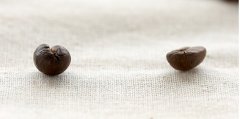
Coffee beans or mother beans, round beans, oval coffee beans, roasted coffee beans, coffee beans.
In fact, male beans and female beans are the wrong name, the so-called male beans should be called round beans, and female beans refer to normal beans, but this term is more misleading, because there are no male and female coffee beans. Generally speaking, coffee beans have two pieces of beans that are semi-oval, but only one piece of beans is a whole oval, generally speaking, round beans are more easily heated evenly, so baking.
2016-04-18 Coffee male bean or female bean round bean oval coffee bean roasted shape male